RimWorld Cloth: How to Grow Cotton, Harvest & Plan Your Farm
How to get cloth from cotton in RimWorld
Mature cotton plants drop cloth when you harvest them. No loom and no fiber step. Plant the field, haul the stacks indoors, and leave a reserve for medicine and flak before you spend the rest on clothes or carpets.
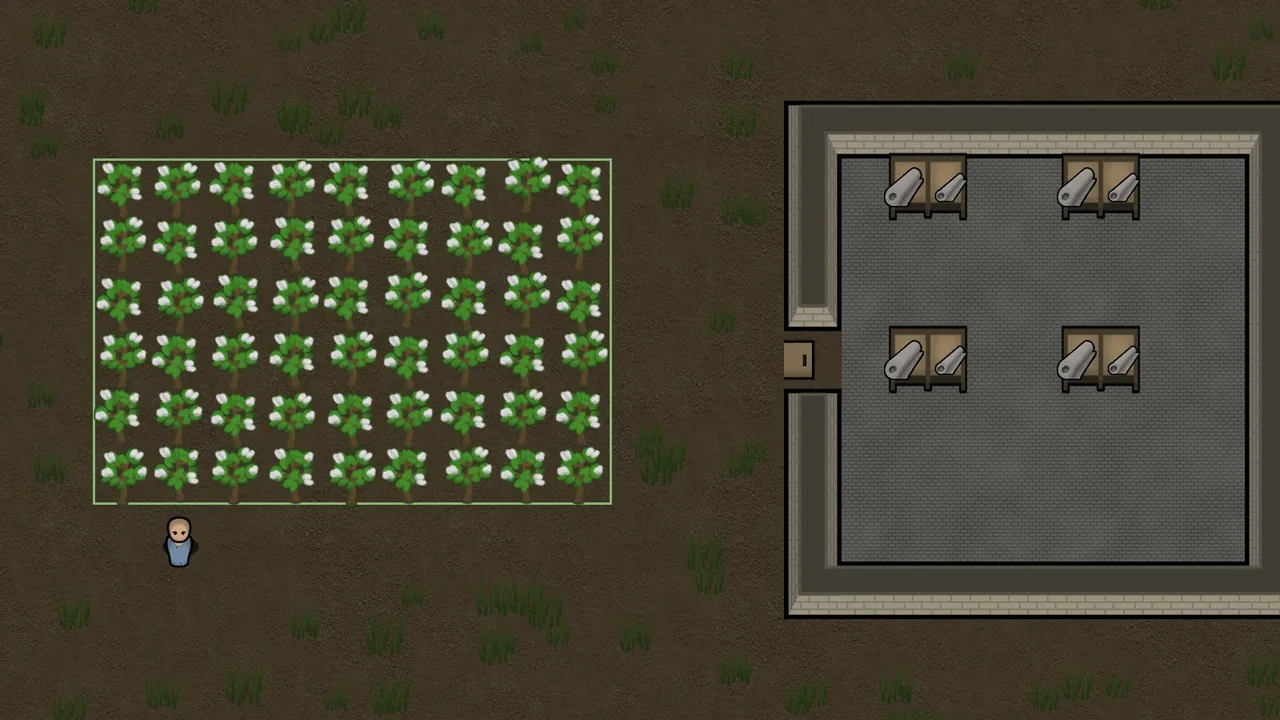
How to get cloth in RimWorld
- Draw a growing zone. Architect → Zone → Growing zone. Pick ground at 70% fertility or better.
- Set the crop to cotton plant. It is available with no research. Hydroponics basins can grow it once you have that setup.
- Assign Grow work. A capable colonist sows the tiles and auto-harvests when plants mature.
- Collect cloth, not fiber. The harvest item is already cloth. A tailoring bench turns it into apparel; you do not weave anything first.
- Store it indoors or on shelves. Allow cloth in the storage filter and keep hauling enabled. A roof over an outdoor stockpile still leaves stacks open to deterioration.
Growth time by soil fertility
Cotton's growth statistic is 8 days of continuous growth at normal fertility. Plants rest at night, so real calendar time is longer. Light, temperature, and interruptions all stretch the cycle.
Treat the table below as planning estimates. Sowing time of day, weather, late harvests, and replanting change what you actually see.
| Growing surface | Fertility | Ideal growth estimate |
|---|---|---|
| Stony soil / gravel | 70% | ~20.8 days |
| Soil | 100% | ~14.5 days |
| Rich soil | 140% | ~10.4 days |
| Hydroponics basin | 280% | ~5.2 days |
Estimates assume a 55% daily growth window plus ideal light and temperature. Hydroponics needs power; indoor setups need suitable lighting. Night rest still applies.
Base yield is 10 cloth
A healthy mature plant starts at 10 cloth. Difficulty then scales the average to about 12 on Peaceful / Community builder, 10 on Adventure story / Strive to survive, 9.5 on Blood and dust, or 8 on Losing is fun, before the grower's harvest stat.
Fractional amounts round randomly into whole items, so 9.5 is an average, not a legal stack size.
The grower changes the haul
For human colonists, Plant Harvest Yield below 100% can waste the harvest. Above 100% it adds more cloth. Read the pawn's actual stat; injuries and other modifiers stack with Plants skill.
Cutting early or harvesting a damaged plant cuts yield. Blighted plants give nothing.
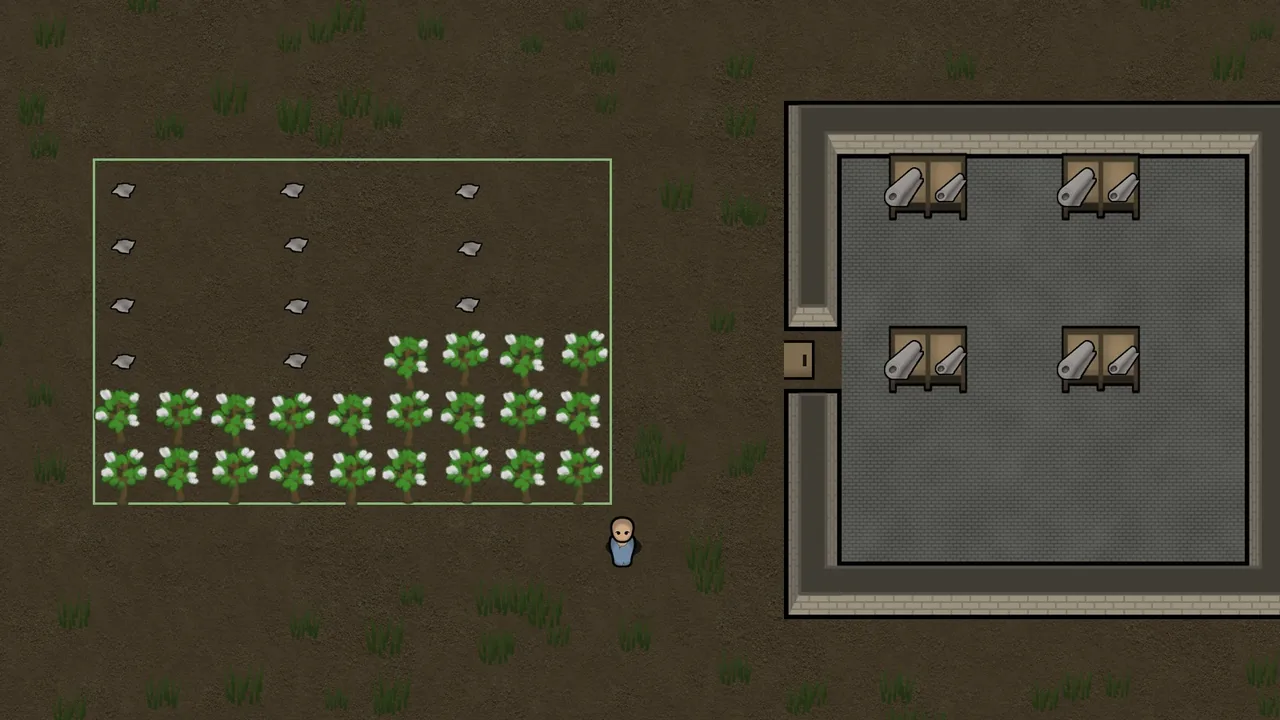
Cotton farm calculator
Estimate a mature harvest and long-run medicine cloth. One-time builds (flak, carpet, molotovs) spend a batch once; they are not a daily drain.
Your estimate
Ideal average output exceeds the medicine demand.
Also budget 1 herbal medicine and 1 neutroamine per day.
Assumes mature, undamaged plants, a human grower, and stable conditions. The pawn input is Plant Harvest Yield; difficulty is applied separately. Harvests are discrete and random. "Cloth per day" averages the crop over its growth cycle; you receive nothing until harvest. No allowance for labor, cold, outages, blight, or replanting. Stored cloth is deducted only from one-time projects. Keep a reserve and do not spend it twice.
Recipes that still need cloth
Leather and devilstrand can stand in for cloth on many clothing bills. These recipes keep a hard cloth ingredient, so plan cotton (or purchases) for them.
| Item | Cloth required | Other ingredients | Where / unlock |
|---|---|---|---|
| Industrial medicine | 3 | 1 herbal medicine + 1 neutroamine | Drug lab · Medicine production |
| Flak vest | 30 | 60 steel + 1 component | Machining table · Flak armor |
| Flak pants | 30 | 60 steel + 1 component | Machining table · Flak armor |
| Flak jacket | 50 | 70 steel + 1 component | Machining table · Flak armor |
| Carpet, per tile | 7 | - | Floors · Carpet-making |
| Fine / patterned carpets, per tile | 35 | - | Fine: Royalty · Morbid, mindbend, hex: Ideology |
| Poker table | 50 | 50 building material + 25 wood | Recreation · Complex furniture |
| Billiards table | 80 | 80 building material + 30 wood | Recreation · Complex furniture |
| Molotov cocktails | 25 | 80 chemfuel | Machining table · Machining |
Table material costs shown are for ordinary materials; silver and gold need more units. One Molotov recipe makes a reusable weapon, not a batch of throwaway ammo.
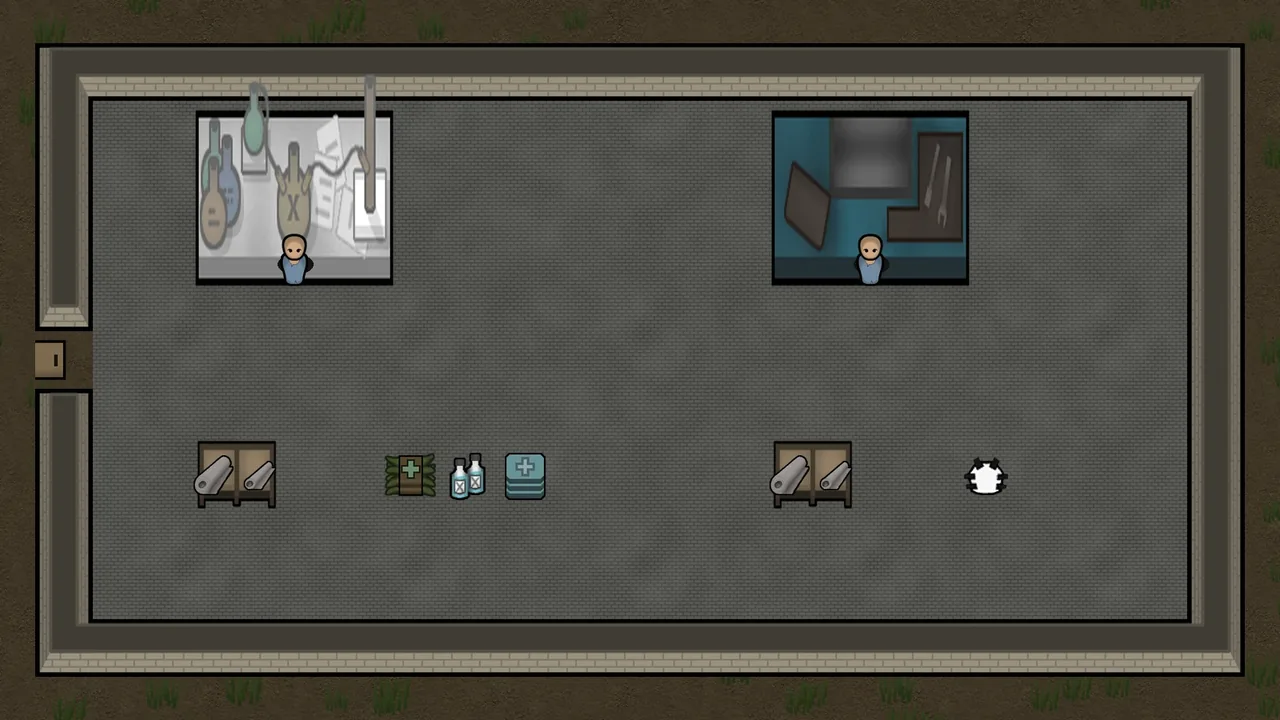
Supplying medicine
The bulk bill makes 4 medicine from 12 cloth, 4 herbal medicine, and 4 neutroamine. It does not save ingredients. The crafter needs Crafting 4 and Intellectual 4.
Medicine production sits after Drug production and Microelectronics, and it needs a hi-tech research bench. In the unmodded game, Neutroamine comes from outside your own production.
After devilstrand
Shrink cotton planting to match the bills that still demand cloth, or buy cloth when traders list it. Devilstrand is a stronger clothing material, but medicine, flak, carpets, and recreation tables still spend cloth.
Cloth's material armor numbers are not a finished garment's protection. Apparel type and quality decide the real armor values.
Harvested cotton, but no cloth?
If nothing dropped
- Failed harvest. Low Plant Harvest Yield can waste a human colonist's haul.
- Check the plant. Blight kills yield. Very young plants cannot be harvested for cloth; damage and early cuts reduce the amount.
- Check mods. Some mods replace the direct cloth harvest with fiber or another intermediate.
If the bench cannot use it
- Look in the field. The item is named cloth, not cotton. Hauling may still be queued.
- Check access. Forbidden stacks, allowed areas, storage filters, and the bill's ingredient radius can block use.
- Check other bills. Tailoring, medicine, or construction may already have spent it. Exposed stacks can deteriorate.
If the field never gets worked, confirm the crop is cotton, Grow work is on, the plants are mature, and the grower can path to the zone.
Watch the cloth guide
Planting, harvest haul, and the bills that keep spending cloth after you unlock better clothing materials.
Common cotton questions
Can I dye a stack of cloth?
You cannot recolor raw cloth stacks with tinctoria dye in the unmodded game. Traders can offer different cloth colors. Painting buildings and floors, and recoloring apparel at a styling station, are separate actions.
Can cotton grow in hydroponics?
Yes. Cotton is an allowed basin crop. Keep the basin powered and provide adequate light and temperature. Nightly plant rest still applies.
Does wild cotton produce the same resource?
Odyssey adds wild cotton. Harvest it for cloth; the wild variant is not a crop you can select for sowing. Use regular cotton in growing zones.
Is five cotton plants enough for one medicine per day?
Five is an ideal long-run estimate on normal soil with 100% difficulty yield and a 100% harvest-yield grower. It covers only the cloth. You still need herbal medicine, Neutroamine, labor, and a starting reserve that lasts until harvest. Plant extra to absorb setbacks.